DETAILED FINDINGSTesting and measurement performance
VitalTrack Pro stayed closely grouped across repeated simulator and everyday-use sessions. Positioning and cuff tension still mattered—as they do with every upper-arm monitor—but the device made a correct routine easy to reproduce and gave clear feedback when a reading needed to be repeated.
No product is judged from its most flattering reading. We repeated the sequence after removing and refitting the device, then examined the spread of results, failed attempts and whether the instructions helped a user recreate sound technique without supervision.
Setup and everyday operation
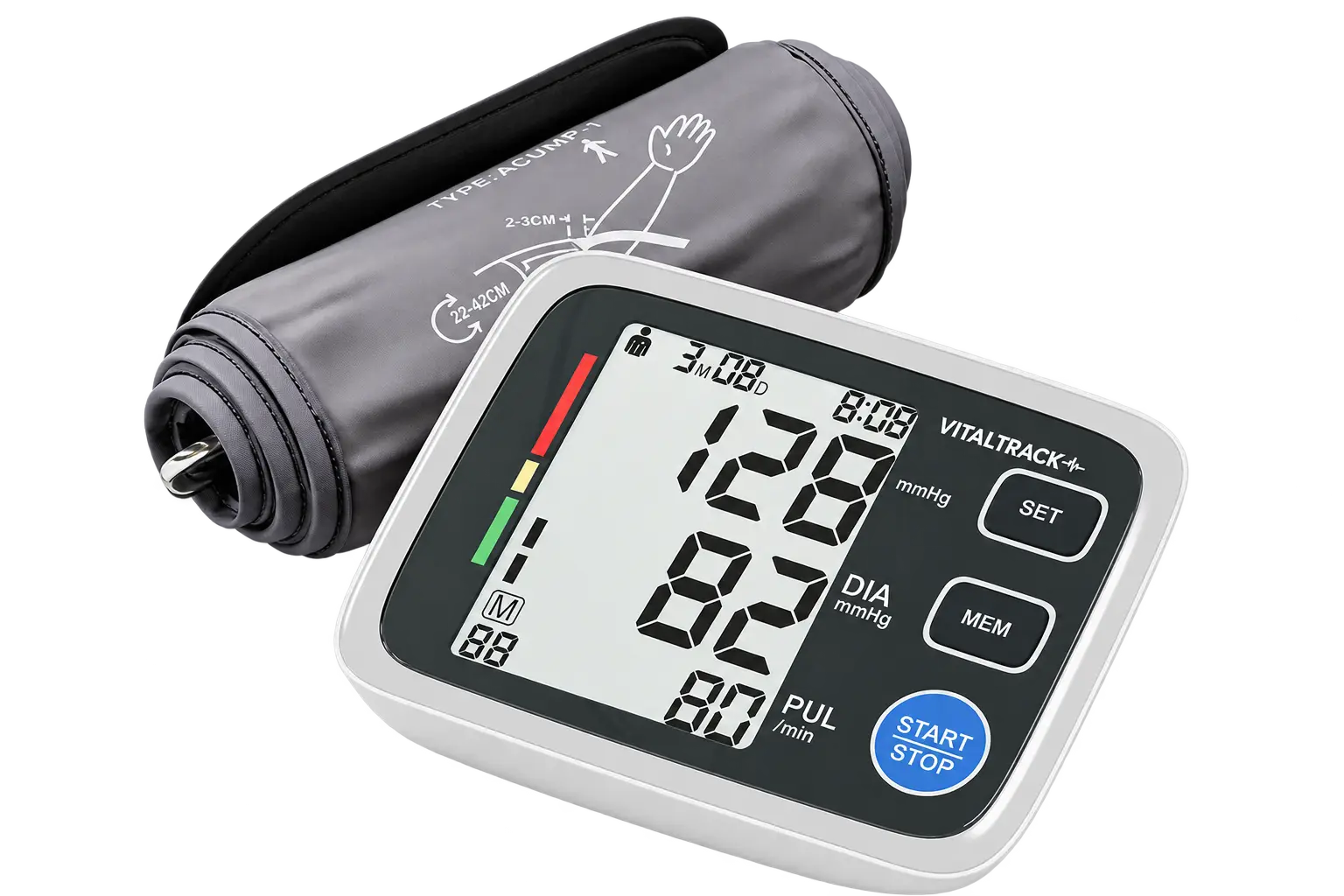
One-button operation and a large display reduce the number of decisions required before a measurement. Results remain available on the monitor itself, which is useful for households that want a direct medical-device experience rather than another connected service to configure and maintain.
We scored the controls, display, feedback and recovery from common mistakes together. Strong controlled performance is less useful at home when a product makes correct positioning or interpretation needlessly difficult.
Comfort, construction and ownership
The monitor feels stable on a table, the cuff is broad enough to distribute pressure comfortably, and the display remains readable from a normal seated position. It is not the smallest option in the comparison, but the extra size supports clarity and makes the controls easier to identify.
Storage, cleaning, power, replacement parts and warranty terms were considered over the ownership period. They cannot rescue weak core performance, but they often decide whether a good device continues to be used correctly after the initial enthusiasm fades.
Records and results
Up to 200 readings can be retained on the device. That suits users who want to review recent measurements directly and record important trends manually. People who specifically need automatic cloud charts or remote syncing should consider a connected alternative instead.
 95/100