DETAILED FINDINGSTesting and measurement performance
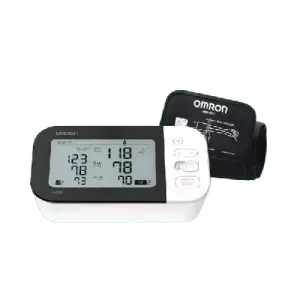
Omron M7 Intelli IT was assessed through repeated measurement sessions with fitting and positioning reset between sequences. Readings were considered as a group rather than selected individually, with attention paid to clustering, error messages and the ease of reproducing the same technique. Cuff-position guidance, multi-user records and an established upper-arm format make it a capable choice for regular household use.
No product is judged from its most flattering reading. We repeated the sequence after removing and refitting the device, then examined the spread of results, failed attempts and whether the instructions helped a user recreate sound technique without supervision.
Setup and everyday operation
We followed the supplied setup and measurement instructions from the perspective of a new owner, then repeated the process after familiarisation. Labelling, controls, display clarity, cuff guidance and access to stored results were considered together. The interface and connected features require more familiarisation than a simple one-button monitor.
We scored the controls, display, feedback and recovery from common mistakes together. Strong controlled performance is less useful at home when a product makes correct positioning or interpretation needlessly difficult.
Comfort, construction and ownership
Materials, cuff construction, stability, storage and day-to-day handling were reviewed over the test period. The product feels appropriate for regular home use, although its particular format creates a different balance between portability, simplicity and flexibility than a conventional separate-cuff monitor.
Storage, cleaning, power, replacement parts and warranty terms were considered over the ownership period. They cannot rescue weak core performance, but they often decide whether a good device continues to be used correctly after the initial enthusiasm fades.
Records and results
We checked how easily a user could retrieve, understand and share a sequence of readings without losing important context. Record-management features are useful only when they reduce transcription and interpretation errors; they did not receive extra credit simply for adding an app or a longer feature list.
 89/100